Why So Many Commercial Projects Choose TPO Roofing

When you’re responsible for a commercial or industrial building, the roof isn’t just a line item — it’s a long-term investment that directly impacts performance, operating costs, and risk. That’s why TPO (Thermoplastic Polyolefin) has become one of the most widely specified roofing systems across North America.

TPO is a single-ply roofing membrane known for its balance of durability, efficiency, and straightforward installation. It delivers reliable protection without unnecessary complexity, making it a strong fit for large facilities, distribution centres, manufacturing plants, and multi-building portfolios.

Built for Performance at Scale

One of the key reasons TPO is trusted on commercial projects is its heat-welded seam system. Instead of relying on adhesives or mechanical overlaps alone, the seams are fused together using heat, creating a continuous, integrated roofing surface. This reduces the risk of water infiltration and helps maintain long-term integrity across wide roof spans.

For facility managers and owners, this translates to fewer unexpected issues and a roof system that performs predictably year after year. For developers and general contractors, it means consistency, reliability, and confidence in the finished product.

Energy Efficiency That Supports Operating Costs

TPO membranes are typically manufactured in a bright, reflective white finish. This helps reduce heat absorption, which can lower rooftop temperatures and reduce the load on HVAC systems. Over time, this can contribute to improved energy efficiency and more stable indoor conditions — especially in large, open facilities.

While no roofing system is a one-size-fits-all solution, TPO is often chosen because it supports operational efficiency without introducing unnecessary complexity into the building envelope.

A Practical Choice for Construction Schedules

On large commercial builds, efficiency matters — not just in materials, but in installation. TPO’s lightweight design and clean installation process make it well-suited for projects where coordination, sequencing, and timelines are critical.

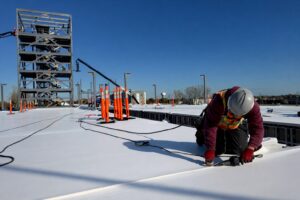
📸 Our team is shown here installing a TPO roofing system at Z Modular, a project where quality, coordination, and schedule all mattered.

When installed by an experienced commercial roofing contractor, TPO allows projects to move forward smoothly while meeting performance expectations.

Experience Matters

Like any commercial roofing system, the long-term success of TPO depends on proper design, detailing, and installation. Material selection is only one part of the equation — experience, planning, and execution make the difference.

At Empire Roofing, we work closely with owners, facility teams, developers, and general contractors to ensure the roofing system aligns with the building’s function, budget, and long-term goals.


Got questions about our commercial roofing systems? Contact us at sales@empireroofing.ca

How Empire Prepares for Roofing Projects Coast to Coast

As Empire Roofing continues to deliver top-tier commercial, industrial, and institutional roofing across the country, our crews are often deployed from one end of Canada to the other. While our teams are well-versed in working coast to coast, each province comes with its own set of safety standards, climate challenges, and jobsite logistics.
As we gear up for a new project in Saskatchewan, here’s a behind-the-scenes look at how we prepare to meet regional requirements and maintain our commitment to safety and efficiency—no matter the location.
Adapting to Provincial Safety Standards
Each province in Canada has its own Occupational Health and Safety (OHS) legislation, and Saskatchewan is no exception. Before we arrive onsite, our team reviews the provincial OHS Act and Regulations to ensure full compliance. This includes site-specific fall protection requirements, daily inspection protocols, and even high-visibility clothing mandates that may differ from Ontario or Quebec.
At Empire, we go above and beyond basic compliance—we train our teams to anticipate these differences, so we prevent delays and prioritize safety from day one.
Preparing for Prairie Weather
Roofing in Saskatchewan means preparing for dry, hot summers and unpredictable weather shifts. Unlike the humid heat we’re used to in Southern Ontario, Saskatchewan’s dry heat increases the risk of dehydration and heat stress—often without the usual warning signs. Strong wind gusts are also a common concern on the open Prairies, making rooftop safety and material handling a top priority.Our team always creates a Plan A and Plan B based on weather forecasts and builds additional safety protocols for heat advisories, air quality alerts, and storm warnings. Safety planning isn’t just a requirement—it’s built into our daily operations.
Logistics Matter—Especially in Remote Areas
Many Saskatchewan projects are located outside major city centers, which means longer lead times for material delivery, limited access to rentals, and fewer supply options. We ship backup materials, extra safety gear, and tools in advance to avoid costly delays and ensure our crews are equipped for anything.
We also coordinate site mobilization details before arrival—everything from fencing and signage to equipment storage and municipal permits is handled ahead of time to keep things moving.
Interprovincial Compliance
When operating outside of Ontario, we ensure all Workers’ Compensation Board (WCB) requirements are met in the host province. This means obtaining necessary clearances, understanding reporting procedures for workplace injuries, and maintaining proper insurance and documentation for our crews.
Our administrative and safety teams work closely together to manage these details so our project teams can stay focused on delivering quality work safely and efficiently.
Aligning Crews, Culture, and Communication
Empire often works with local subcontractors and suppliers on out-of-province projects, and we take the time to align everyone with our expectations. Before the first tool hits the roof, we conduct site-specific safety orientations and clarify roles, responsibilities, and reporting chains.Whether it's a site supervisor, foreman, or new team member—everyone is expected to uphold Empire’s safety culture and high standards.
At Empire Roofing, being coast-to-coast capable means more than just travel—it means planning, training, and anticipating everything we need to keep our projects safe, smooth, and successful.
Stay tuned for more project highlights from across Canada!
Interested in working with us? Contact our team at sales@empireroofing.ca

Summer Flat Roof Maintenance Checklist for Commercial Properties

Summer might seem like the season when your flat roof gets a break—but in reality, it’s one of the most important times for inspections and maintenance. Heat, UV exposure, and sudden summer storms can all take a toll on your roofing system.
For commercial property owners and facility managers, following a seasonal checklist helps extend roof life, reduce costly repairs, and ensure your building is ready for the months ahead.Here’s our summer flat roof maintenance checklist to keep your investment in top shape.

1. Inspect for Heat & UV Damage

Why it matters: Extended exposure to high temperatures and direct sunlight can cause membranes to crack, blister, or shrink—especially on older systems. Key steps to address this:
  • Have a qualified roofing professional assess for visible cracks, bubbles, or discoloration.
  • Pay extra attention to south- and west-facing areas where sun exposure is strongest.
  • Complete repairs promptly to prevent further deterioration.

2. Check for Ponding Water After Storms

Why it matters: Even in summer, heavy downpours can create pooling water, which accelerates wear and may indicate drainage issues. Key steps to address this:
  • Arrange post-storm inspections to identify areas where water lingers.
  • Ensure drains and scuppers are clear to restore proper flow.
  • Consider adding tapered insulation in low spots if ponding is recurring.

3. Examine Flashing & Seals

Why it matters: Flashing protects roof edges, penetrations, and transition points. Summer heat can cause sealant to dry out and crack. Key steps to address this:
  • Have all flashing inspected for gaps, lifting, or brittle sealant.
  • Reseal or replace damaged sections before leaks occur.
  • Confirm any work aligns with manufacturer specifications to maintain warranties.

4. Clear Drains, Gutters & Scuppers

Why it matters: Leaves, twigs, and debris can block drainage systems, leading to ponding or overflow damage during summer storms. Key steps to address this:
  • Remove debris from drainage systems to ensure free water flow.
  • Install strainers or guards to help reduce clogs.
  • Incorporate drain cleaning into routine maintenance.

5. Look for Signs of Foot Traffic Damage

Why it matters: HVAC servicing and other rooftop work often happen in summer—putting added stress on the membrane. Key steps to address this:
  • Inspect for punctures, scuffs, or torn seams in areas where work has been performed.
  • Install walkway pads in high-traffic zones.
  • Reinforce roof protection protocols with any contractors working on-site.

6. Schedule a Professional Roof Inspection

Why it matters: A professional can spot issues you might miss, use infrared scans to detect hidden moisture, and recommend cost-effective repairs. Key steps to address this:
  • Schedule at least one professional inspection during summer.
  • Request a detailed report with photos for documentation.
  • Use findings to plan preventative maintenance before fall.

Protect Your Roof Year-Round

Summer is the perfect time to address small problems before they become costly repairs. With Empire Roofing’s Preventative Maintenance Program and 2–4 hour Emergency Response, you can keep your flat roof in peak condition and avoid operational disruptions.   📞 Schedule your summer flat roof inspection today and keep your property protected. 🔗 sales@empireroofing.ca  |  1-844-547-7663

Extending Roof Life Between Re-Roof Cycles

Empire + Elevate TPO Roofing

Extending Roof Life Between Re-Roof Cycles: What Every Facility Manager Should Know

Re-roofing is inevitable—but it doesn’t have to come as a surprise.

For property owners and facility managers, the key to managing roofing costs lies in one strategy: prolonging the life of your current roofing system through proactive care, expert guidance, and strategic upgrades.

At Empire Roofing, we work with commercial, industrial, and institutional clients across North America to help them do just that.

Why Extend Your Roof’s Life?

Postponing a complete re-roof can free up capital for other upgrades, prevent business disruption, and minimize costly emergency repairs. With proper maintenance, many flat roofing systems—TPO, EPDM, modified bitumen, and others—can perform well past their manufacturer’s baseline lifespan.

Here’s how to make that happen:

1. Schedule Routine Inspections

Your roof is your building’s first line of defense, but it’s also out of sight—which means issues can go unnoticed until it’s too late. Empire’s 100-point inspections are designed to spot vulnerabilities early, from membrane cracks to blocked drains and deteriorated flashing.

By catching problems early, you avoid damage to insulation, interior systems, and valuable assets.

2. Perform Preventative Maintenance

Small fixes make a big difference. Our Preventative Maintenance Program includes:

– Minor membrane repairs
– Seam resealing
– Drain clearing
– Debris removal
– Penetration checks

This approach not only keeps your roof watertight—it keeps your manufacturer’s warranty compliant too.

3. Invest in Thermal Drone Scanning

Thermal Drone Scan by Empire Roofing

Not all damage is visible to the eye. Our thermal drone inspections detect trapped moisture and insulation breakdown without disrupting operations. These scans give you a full picture of your roof’s performance—and help you budget for upgrades before a leak forces your hand.

4. Align Maintenance With Your Operations

We know that for many clients—especially in healthcare and manufacturing—downtime is not an option. That’s why we work with your team to schedule inspections and repairs around your production or care schedules, minimizing risk and disruption.

5. Consider Targeted Upgrades

If parts of your roof are nearing the end of their life, but the full system doesn’t need to be replaced yet, partial re-roofing or overlay systems can buy time while still improving performance.

Upgrades like switching from aging bitumen to reflective TPO can also cut cooling costs and increase energy efficiency.

Case in Point: Extending Roof Life at a Retirement Home

When a major retirement facility reached out to Empire, their roof was showing signs of age—but a full replacement wasn’t financially or logistically feasible that year. Our team:

  • Performed thermal scans to identify moisture infiltration
  • Conducted spot repairs to damaged areas
  • Installed temporary protective coating to high-risk zones
  • Created a phased re-roofing plan for the next 18 months

The result? Zero business disruption, no active leaks, and a long-term capital plan built on real-time data.

EMPIRE + CHARTWELL

Ready to Extend Your Roof’s Lifespan?

Whether you manage a retail plaza, warehouse, school, or hospital, Empire can help you reduce risk and delay costly re-roofing through smart, strategic maintenance.

📩 Book your inspection today: service@empireroofing.ca
📞 Call us: 1-844-547-7663